


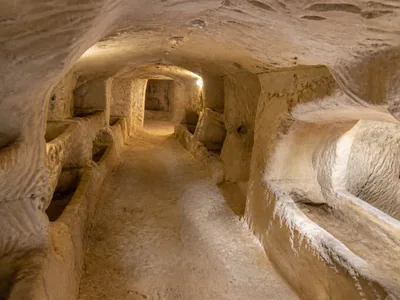
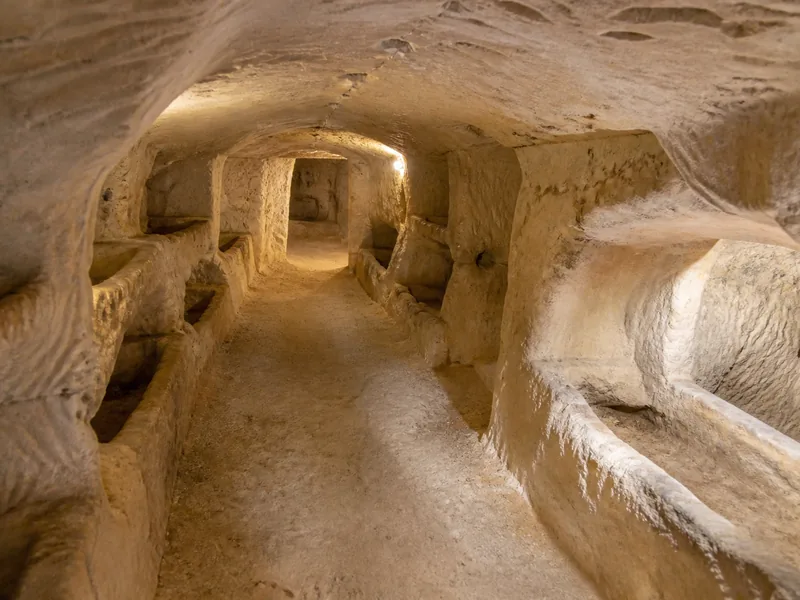
St Paul's Catacombs are Malta's largest underground burial complex in Rabat, a maze of rock‑cut passages from late Roman and early Christian times. You come for the sense of scale and ritual, above all to stand by the two stone dining tables where families once gathered to remember their dead. The complex contains more than 30 hypogea. Archaeologists estimate more than 1,000 burials here. Two circular tables hewn from the living rock, the triclinia, are a standout.
What your visit depends on is mainly your comfort underground and how much time you give it. Plan 1 to 2 hours for a visit. Some areas are inaccessible. Audio guides are available in Maltese, English and Spanish. There are audio guides for children as well as for adults. If you like places with proper recognition for their cultural weight, it is the first place in Malta to receive the European Heritage Label.
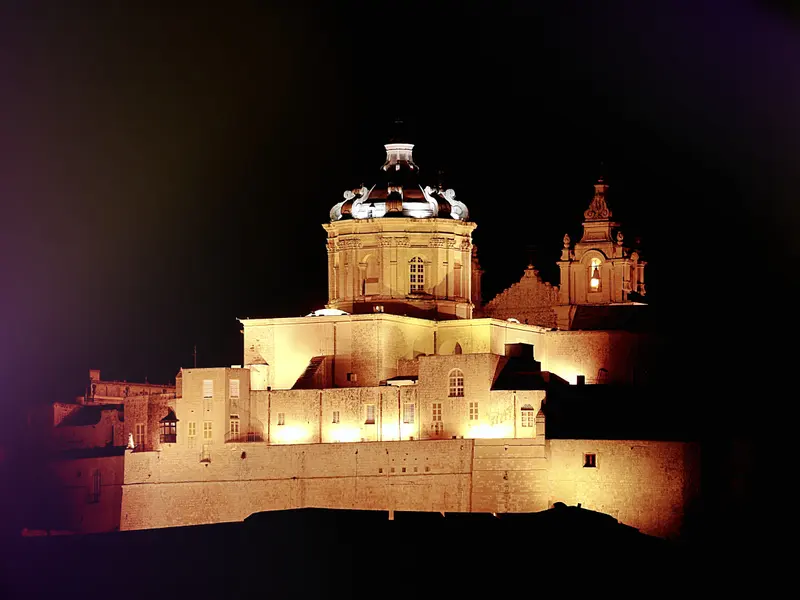
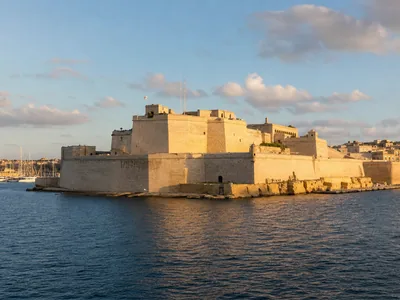
If you are on the bus, it is an easy ride from the capital and a short walk at the Rabat end, which makes it simple to pair with the walled city next door. From Valletta, buses 51, 52, 53 and 56 run to Rabat. The journey takes just over 30 minutes. The closest bus stop is about five minutes on foot. It takes under ten minutes on foot from the Rabat stop. A simple day is to visit the catacombs before or after a wander through Mdina Rabat, and if you are based in Valletta you can be back in time for an evening walk or a Grand Harbour cruise.
Driving is possible but Rabat’s streets and the Mdina fringe can be busy, especially at weekends. Blue Badge parking bays are designated on a first-come basis where the site permits. Give yourself a little buffer to circle for a spot or to park a short walk away.
Opening hours are Tuesday to Sunday, 09:00 to 17:00. Aim for the first hour of the day for the quietest chambers and cooler air in summer.
Tickets are straightforward and good value for what you see underfoot. Adult tickets cost €6.00. Children aged 6 to 11 pay €3.50. Youth tickets, for ages 12 to 17, cost €4.50. Seniors aged 60 and over pay €4.50. Infants aged 1 to 5 go free. Heritage Malta Members enter free. Heritage Malta Passport Holders enter free.
If you are timing the rest of your day around it, a solid hour underground plus another half hour for the museum and a pause outside is about right for most people. If your eye lingers on inscriptions and cut‑stone detail, or you are visiting with children using the audio guide, give it the full stretch you planned earlier.
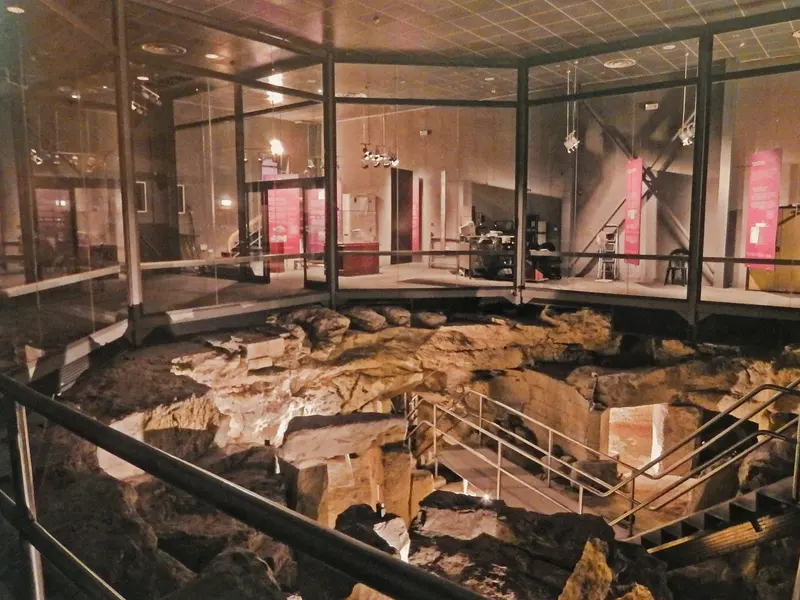
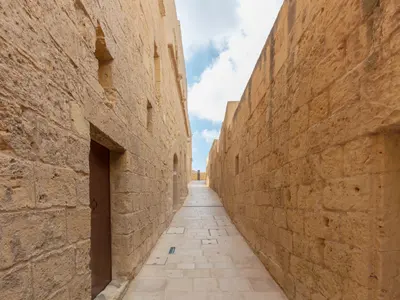
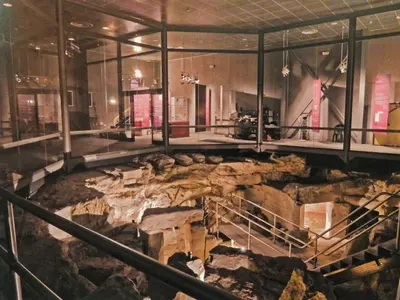
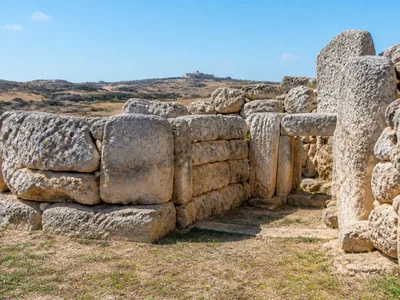
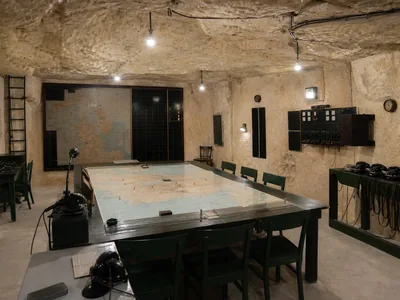
What it is like below ground: a low world of tufa with side chambers opening off a central spine, some wide enough to feel like halls, others squeezing to a crouch. The main complex covers over 2,000 square metres. The tunnels extend for around 4 kilometres. Pillars in the main halls were carved to resemble Doric columns. Most of the painted plaster has disappeared. There is an on-site museum before you descend. The site was abandoned during Malta's Muslim period and rediscovered in the 19th century. It was reused as a Christian shrine in the 13th century, with mural decoration. A small church was later built over the catacombs. A cave nearby is traditionally associated with St Paul. If your main draw is underground Malta, weigh this against the Hal Saflieni Hypogeum, which is smaller but uniquely preserved and must be booked far ahead, then decide which suits your day.
Practicalities on site are better than many old sites. There are fully accessible toilets. There is a nappy changing facility. There is a gift shop. There are lockers. There is indoor and outdoor seating. Staff keep the route signed and lit, but floors are uneven in places and there are steps, so flat shoes and a light layer for the cool air make sense.
Accessibility is mixed by the nature of the place. Some areas are inaccessible, with steps, low ceilings and uneven ground that are part of the original cut rock. If mobility is limited, stick to the widest galleries and the museum above, and ask staff which sequence is flattest on the day.
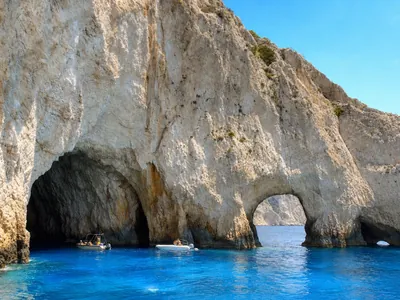
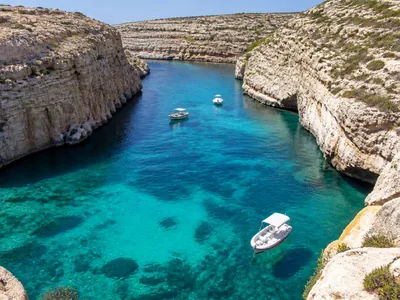
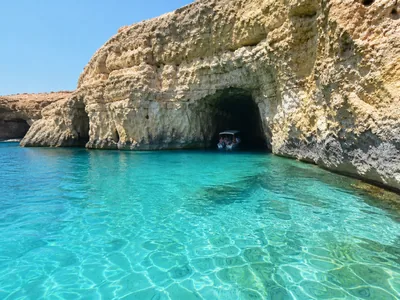
If you are building a longer Malta plan, pair this with a quiet evening stroll in Mdina Rabat after the day‑trippers have gone, or balance it with something bright and open such as the Blue Grotto or a day on the water at the Blue Lagoon Comino.
Common questions
How long do I need?
Plan 1 to 2 hours for a visit. Give yourself time to read the panels, explore the larger chambers and still come up for a lap of Rabat and nearby Mdina.
How do I get there by bus?
From Valletta, buses 51, 52, 53 and 56 run to Rabat. The journey takes just over 30 minutes. The closest bus stop is about five minutes on foot. It takes under ten minutes on foot from the Rabat stop.
Is it suitable for children?
Audio guides are available in Maltese, English and Spanish. There are audio guides for children as well as for adults. The route itself includes steps and dim spaces, so judge it against your child’s comfort underground.
When is it open?
Opening hours are Tuesday to Sunday, 09:00 to 17:00.
What facilities are on site?
There are fully accessible toilets. There is a nappy changing facility. There is a gift shop. There are lockers. There is indoor and outdoor seating.
Last checked: 4 October 2026. Prices, opening hours and timetables change, verify anything time-sensitive before you travel. Photo: Diego Delso, CC BY-SA 4.0.