
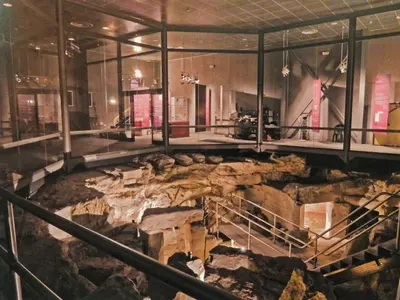

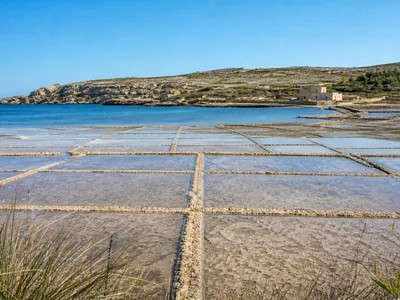

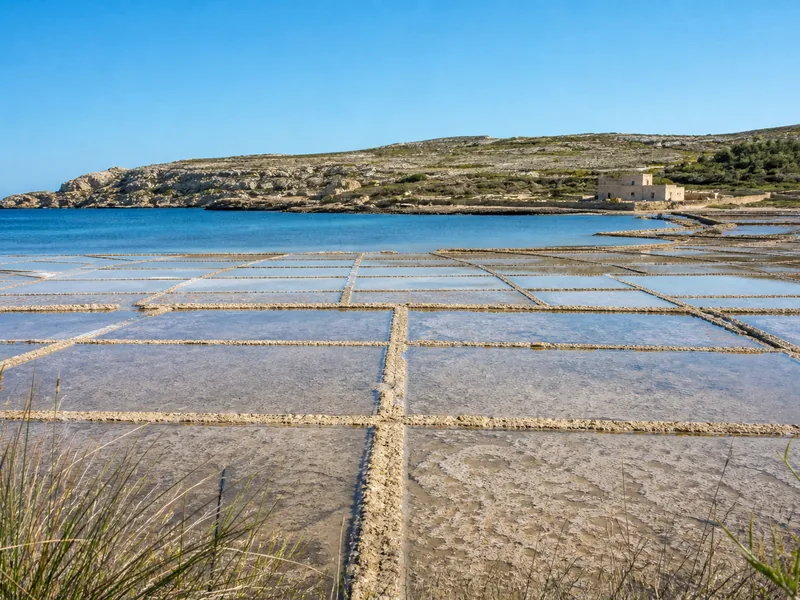
The Salina Salt Pans are Malta’s historic saltworks turned nature reserve on the Coast Road, a flat, easy place to wander with birds feeding and roosting across the shallow pans. It is free to enter, with donations welcome, and there is now a small Salt Museum that explains how sea and sun once made a living here.
Your experience depends a lot on season and time of day. In winter, spring and autumn the pans can be lively with migration, while in summer heat the birds thin out and you come more for the quiet geometry of water, stone and sky. Sunset often lays mirror-gloss across the basins, and on some days you will find hundreds of gulls dropping in to roost. If you want a steadier look, a new birdwatching hide can be booked in advance.
Where is it and what came before: the reserve sits directly on the Coast Road between Baħar iċ‑Ċagħaq and St Paul’s Bay, so you can be out of the car and on the path in minutes. The salt pans themselves date to the 16th century under the Knights of St John, with Ximenes Redoubt from 1715/16 still anchoring one corner of the site. In late autumn 2023 a restored wetland on the Kennedy Grove side was completed, improving habitat and water control while keeping the feeling of a working landscape.
What it looks and feels like: long causeways divide shallow rectangles of brine, bordered by patches of saltmarsh, pockets of garrigue and small woodland. The ground is flat and walking is easy, with a mix of unpaved service roads and narrower paths that thread between pans. Bring a hat and water, since there is little shade once you leave the entrance, and a telescope is recommended if you want to pick birds along the far edges.
Bird highlights: the site is renowned for gulls, with Yellow‑legged, Mediterranean and Black‑headed regular and sometimes as much as 2,000 gulls in a day. Sandwich Tern is seen almost every day, with Caspian and Gull‑billed Terns occasionally cutting through. Little Egret has become a familiar sight, Common Sandpiper is a feature of winter, and during migration the causeways can host passing herons and egrets. Greater Flamingo occurs very rarely, so count yourself lucky if a bird drops in.
Opening hours, access and costs: you can walk freely through part of the park 07:00–20:00 from April to September. From October to March it is 07:00–18:00. The reception is usually open Monday to Friday 08:00–16:00 and on Sundays 10:00–16:00, helpful if you want pointers before you head out. The Salt Museum is free, donations appreciated, open every day 8:00–18:00 up to 15 September and 8:00–17:00 from 16 September onwards, and the Salt Museum opened in July 2024. Staff are usually available on site and it is child friendly, so it works well as a gentle nature stop for families.
Getting there: drivers simply follow the Coast Road and look for the reserve signs near Salini. Ample parking sits close by, which makes popping in at dawn or after work easy. Bus routes 49, 212, 222, 225, N11, N212, X1 and X1B stop at Għasfur and Salini, a short walk from the paths. Cycling the Coast Road is straightforward for confident riders, and the flat layout makes a slow roll through the entrance area feel natural when traffic is light.
Access and facilities: the reserve is free to enter, with donations welcome. BirdLife Malta manages the site. There are three timber huts reconstructed in the style of the original 18th-century British huts, one of which serves as a small visitors’ point with information about history, salt making and nature. Wheelchair access is possible, some paths and the museum entrance are accessible, and staff are usually available on site if you need a hand. For a quieter circuit, follow the signed circular trail and keep to the designated causeways to protect the birds.
Walking and difficulty: this is an easy, level walk where the main challenge is sun exposure. Expect a simple loop on unpaved road and occasional narrow trail, good for an hour’s amble with stops at the viewpoints and hide, or two hours if you linger. Binoculars are enough for most, though a telescope is recommended for distant birds roosting across the larger pans.
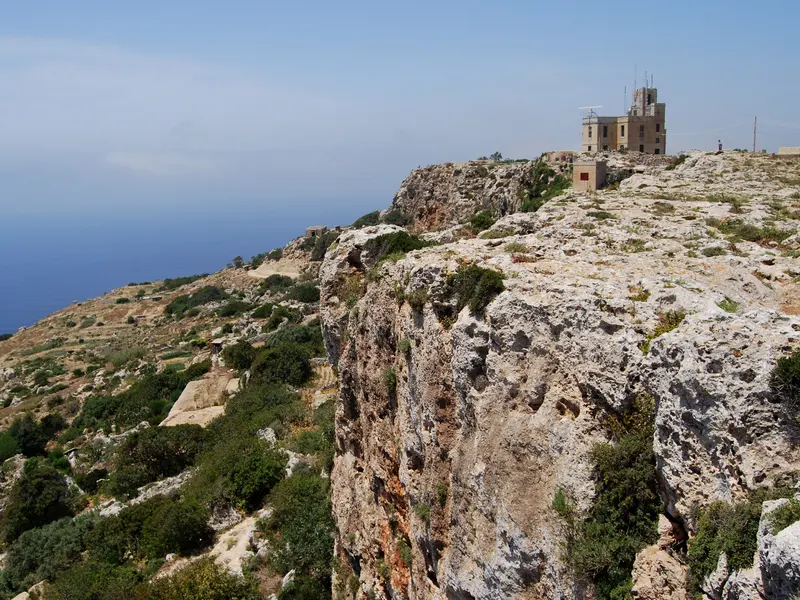
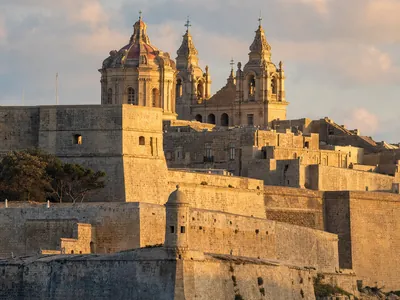
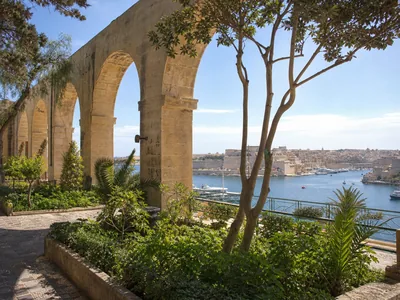
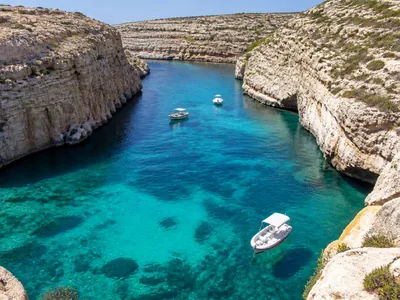
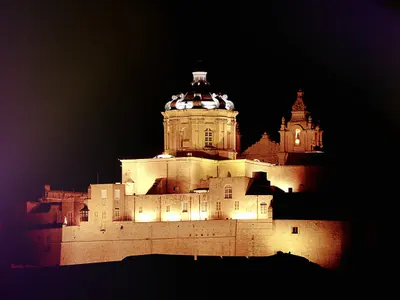
If you are building a day around the north of Malta, pair Salina with Mosta Rotunda inland, or cross the ridge to the walled streets of Mdina–Rabat. Back in the capital, the arc of limestone and harbour at the Upper Barrakka Gardens gives a grand contrast to Salina’s tight lines of stone and water. If sea and rocks are calling, sunset at the Dingli Cliffs makes a fine bookend to a Salina morning, while planners with extra time can fold Salina into a wider day that starts in Valletta and finishes with dinner on St Paul’s Bay.
Key protections and etiquette: this is a Natura 2000 Special Area of Conservation, so stay on marked paths, keep dogs leashed and avoid flushing birds from roosts, especially during spring and autumn migration. Schools can book visits, and the hide can be reserved in advance, both of which help balance access with protection.
Common questions
Do I need a ticket to visit?
No. The reserve is free to enter, with donations welcome. You do not need to book for a simple walk, though a new birdwatching hide can be booked in advance.
When is the best season for birds?
Winter, spring and autumn are best, with spring and autumn migration bringing movement across the pans. Sandwich Tern is seen almost every day, herons and egrets pass through on migration, and gull numbers can spike dramatically.
Which buses stop nearby?
Bus routes 49, 212, 222, 225, N11, N212, X1 and X1B stop at Għasfur and Salini. Services are frequent by Malta standards, but build in a buffer if you want quiet light at dawn or dusk.
Is the site accessible?
Yes. The ground is flat and walking is easy, wheelchair access is possible on parts of the network, some paths and the museum entrance are accessible, and staff are usually available on site.
What hours can I walk without joining a tour?
You can walk freely through part of the park 07:00–20:00 from April to September. From October to March it is 07:00–18:00. The reception is usually open Monday to Friday 08:00–16:00 and on Sundays 10:00–16:00, and the Salt Museum keeps extended daily hours in summer.
Last checked: 25 October 2026. Prices, opening hours and timetables change, verify anything time-sensitive before you travel. Photo: Dey.sandip, CC BY 3.0.