Quick answer
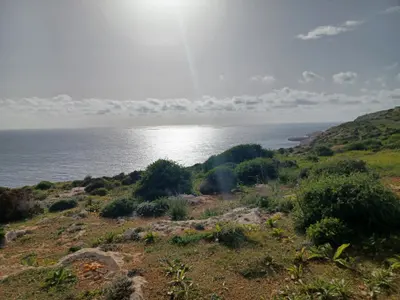
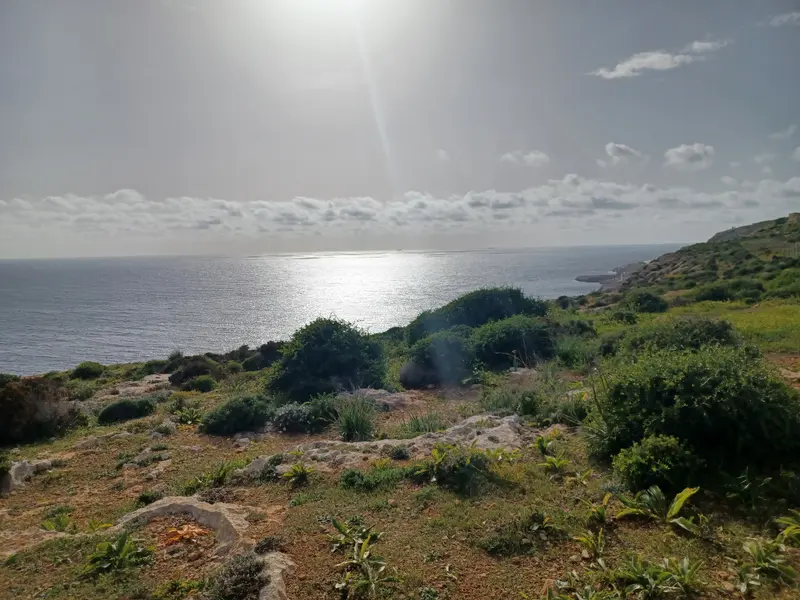
Go, and go when the light is soft. Ħaġar Qim and Mnajdra are Malta’s most evocative prehistoric temples, perched by Qrendi on a ridge with sea on one side and fields on the other, and the walk between them is part of the appeal. If you care about alignments and how these places worked with the sky, Mnajdra rewards a patient visit, while Ħaġar Qim is the easier stop with big slabs, striking doorways and shelter from the sun.
What this depends on
Your decision comes down to heat, mobility and how deep you want to go. Mnajdra lies 500 m downhill from Ħaġar Qim, which means a steady climb back that feels longer in summer. If steps and uneven surfaces are a worry, give most of your time to Ħaġar Qim and the excellent visitor centre. If you like details, look closely at the entrances, wall chambers and floors, and save a few minutes for the views that explain why people chose this ridge in the first place.
Getting there
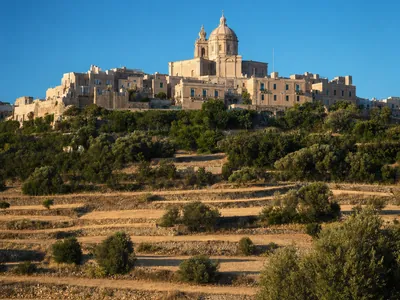
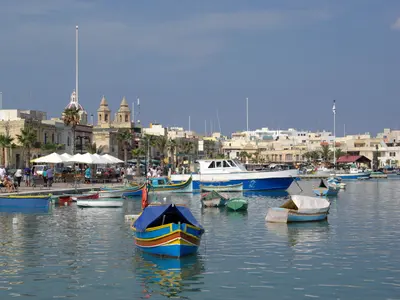
The site sits on Triq Ħaġar Qim, Qrendi, on the southern edge of the island. The closest bus stop is a 3 minute walk along a level approach. Drivers find it easily from the airport and from Valletta by following signs for Qrendi. It pairs well with a harbour lunch in Marsaxlokk, or a medieval wander in Mdina and Rabat later in the day when the walls glow.
Parking
There are parking bays close to the site entrance. Blue badge bays are available on a first come basis. If you arrive late morning in peak season, consider parking a little away from the entrance and walking in, because turnover slows during the hottest hours.
Visitor centre and facilities
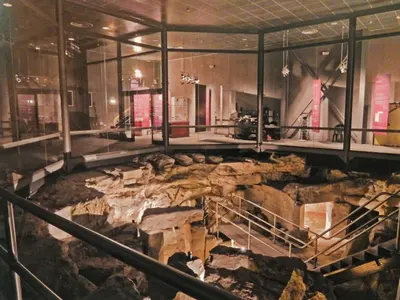
The visitor centre anchors the experience with context and air conditioning before you step onto the ridge. The visitor centre is accessible. There is bicycle parking, food and drinks, indoor and outdoor seating and a gift shop, plus lockers if you want to drop a bag before you head down to Mnajdra. Families get a nappy changing facility, and free binoculars are available near the picnic area so you can pick out detail on the shelters and the sea beyond.
Tickets and prices
Tickets are sold online or at Heritage Malta museums and sites. Adult €10.00, Youth €7.50, Senior €7.50, Students €7.50, Child €5.50, Infants are free, and both Heritage Malta members and Heritage Malta Passport holders go free. If you are planning a special event or evening opening, capacity is limited and can book out quickly.
Opening hours and seasonal notes
Hours vary by season and for special events, so check the official Heritage Malta page before you set off. The site is open to the public and run by Heritage Malta, and occasional evening talks or solstice-themed visits add variety. One recent example, Revisiting the Excavations of Ħaġar Qim and Mnajdra, ran on Saturday 05 Sep 2026 with a 19:00 lecture by the site curator and a meet time of 18:45, and it finished at 21:30 with a glass of wine and light bites, but it was fully booked well before the date.
Site layout and highlights, Ħaġar Qim and Mnajdra
Ħaġar Qim stands on the crest of a ridge, looking over a fertile plain to the east and the open sea to the west. The complex has a separate entrance to four independent enclosures and the classic Maltese mix of trilithon and porthole doorways. The façade shows a trilithon entrance with an outer bench and set orthostats, and the forecourt opens out with a retaining wall and a clear central axis. Tiny wall chambers hide along the sides, a reminder that these spaces were as much about control and ritual as display. The central passage at Ħaġar Qim is laid in stone slabs, while the chamber floors are beaten earth. Builders worked in soft globigerina limestone here, and a corbelled roof once rose over parts of the structure.
Drop on the path to Mnajdra for a different mood, closer to the sea and set in lower scrub. Mnajdra lies 500 m downhill from Ħaġar Qim. It consists of three structures, with the oldest a three‑apsed building, and it mixes globigerina with tougher coralline blocks. The slabs and doorways feel tighter and more deliberate, and on a quiet day you hear only the wind.
Mnajdra’s solstice alignment and astronomical features
At Mnajdra different slabs are illuminated at the winter and summer solstices. The south doorway is also aligned with sunrise at the spring and autumn equinoxes, so the place changes with the year. You do not need to be here on the exact day to appreciate the intent, but if alignments are your thing, aim for the shoulder weeks around the solstices and equinoxes when light angles echo the design without the crowds of a single date.
Archaeology and history
These temples date to the Ġgantija phase, around 3600–3200 BC, so you are walking through spaces over 5000 years old. They were investigated in stages, with notable excavations in 1839, 1885, 1909–1910 and 1949–1950, which means they were excavated less than two centuries ago in modern terms. Together with other prehistoric complexes they form part of the Megalithic Temples of Malta on UNESCO’s list, with later extensions recorded in 1992 and 2015. The sites are owned by the Government of Malta and managed by Heritage Malta, and much of the portable art was moved to the National Museum of Archaeology in Valletta or displayed in the Visitor Centre. Copies stand where originals once did, so the patterns still read in their intended places.
Materials, construction and architectural features
Globigerina limestone shapes most of Ħaġar Qim, and the masons used coralline alongside globigerina at Mnajdra where harder edges were needed. Look for trilithon and porthole doorways, the outer bench and upright orthostats in the façade, the wide forecourt with its retaining wall and the central passage that leads you inward. Corbelling once formed parts of the roofing, which makes the surviving wall height and mass even more impressive given the softness of the stone.
Condition and conservation
You will notice the protective shelters before you reach the stones. They were erected to shield the globigerina from the elements, with shelters put up in 2008 and a major protective canopy completed in 2009. Even with cover, the soft stone shows severe weathering and surface flaking in places, so surfaces that look rough now may once have carried more precise detail. The result is a site that feels both ancient and actively cared for, a balance between exposure and preservation.
Accessibility
Paths around the visitor centre and down to Ħaġar Qim are relatively manageable, and Ħaġar Qim is accessible with assistance. Mnajdra is not accessible. The car park includes disabled provision, and blue badge bays are available on a first come basis. If you need a steadier pace, allow extra time for the return from Mnajdra and consider staying near the upper temple and the exhibits.
Visiting with children and family facilities
This is an easy site to explain to children because the shapes are bold and the doorways are at their height. There is a nappy changing facility in the visitor centre, and staff ask that any child using a children’s room be accompanied by an adult. The shelters take the edge off the sun, but the path to Mnajdra is exposed, so plan shade and water breaks.
Refreshments and nearby eating options
Food and drinks are available at the visitor centre, and there is indoor and outdoor seating plus a picnic area where the free binoculars come in handy. For a full day, combine the temples with a waterfront meal in Marsaxlokk or a harbour circuit on a Grand Harbour cruise after you return towards the capital.
What to bring and wear
Take light layers, a hat and plenty of water. Wear flat, closed shoes, because floors are uneven and the path to Mnajdra can be dusty. A small torch or your phone light helps you pick out carving detail inside the shelters without touching the stone.
What people get wrong
People underestimate the return from Mnajdra in the midday sun. Plan your downhill leg early or late, and leave time to savour details at Ħaġar Qim rather than rushing both. Others expect to see all the original carvings in place, but many originals now sit safely in Valletta or in the Visitor Centre, with copies on site to preserve the story. Some assume Mnajdra is as accessible as the upper complex, which it is not, so plan accordingly.
Frequently asked questions
How long should I allow? Most visitors spend under two hours if they see both temples and the visitor centre without rushing, and you will want pauses for photos and the views. When do special events run? They vary through the year, including evening talks and solstice-related dates, and they can sell out quickly, so check and book early. Planning a wider prehistory day? Pair this with the Hal Saflieni Hypogeum, but tickets there are severely limited so book far ahead, or spread visits across two days so you are not rushing either site. If you are staying longer, Gozo’s ancient sites and Victoria Cittadella make a fine second day, or add the Three Cities for a quick history pivot from prehistory to the Knights.
What is actually bookable here
- 1 bookable option via Tiqets
- about €50 per person at the time of checking
- Free cancellation up to 48 hours ahead on 1 of the 1
- 1 listed as wheelchair accessible
Taken from the operators' own listings, checked 15 September 2026. Ratings are theirs, not ours, and we do not host reviews.
Common questions
Can I reach Mnajdra easily from Ħaġar Qim?
Mnajdra lies 500 m downhill from Ħaġar Qim, and the return is uphill with little shade. If mobility is an issue, plan to focus on Ħaġar Qim and the visitor centre.
Are the original carvings still on site?
Many originals were moved for conservation. The originals are at the National Museum of Archaeology in Valletta or in the Visitor Centre, and copies stand in situ so you still see the motifs in place.
Is the site accessible for wheelchair users?
Ħaġar Qim is accessible with assistance, the visitor centre is accessible, and Mnajdra is not accessible. There are blue badge bays in the car park on a first come basis.
Can I buy tickets on the day?
Yes, tickets are sold online and at Heritage Malta museums and sites. For special events or solstice viewings, capacity is limited and can sell out.
When is the best light for photos?
Early or late in the day brings softer light on the globigerina limestone and long views to sea, and you dodge the midday glare that washes out detail.
Last checked: 14 September 2026. Prices, opening hours and timetables change, verify anything time-sensitive before you travel. Photo: Simon Burchell, CC BY-SA 4.0.