


Quick answer, is Dwejra (Inland Sea & Blue Hole) worth visiting?
Yes, if the sea is calm and you can handle uneven rock, Dwejra is one of the must‑do corners of Gozo. No, if whitecaps are up or you need step‑free access, because the boat tunnel may be shut and the swimming entries are rocky. The Azure Window collapsed on 8 March 2017. The Azure Window has been closed to walkers since 2013.
What this depends on
Dwejra’s best bits are weather dependent. Boats run roughly 08:00 to late afternoon and only when conditions are calm enough. Boats are suspended in rough weather, which is common in winter with the Gregale winds. If mobility is limited, know that Dwejra Bay is not highly accessible and most moving around is on hard limestone with steps cut in the rock rather than smooth paths. If you want a full day that is less weather‑sensitive, pair Gozo’s inland sights like victoria cittadella and the ggantija temples, then swing out to Dwejra when the wind eases.
Getting there, routes, distances and travel times
From Malta, drive or bus to Ċirkewwa and take the Gozo Channel ferry to Mġarr. The Cirkewwa to Mġarr ferry takes 25 min. It is 8 km from Mġarr harbour to Dwejra. The drive from Mġarr to Dwejra takes 15–20 min. It is 12 km from Victoria to Dwejra. If you are slotting Dwejra into a one‑day circuit, see our practical loop on the gozo day trip page.
Parking and access from the car park
There is a rough car park by the Inland Sea end of the bay. It is a 10 min walk from the car park on a flat path. Shade is limited, so bring water and a hat in summer.
Opening hours, seasonality and when boats run
The coastline itself is open all day, so you can come for sunrise light on the cliffs or a glowing sunset behind Fungus Rock. Boatmen work the tunnel only in safe conditions, and they typically finish by late afternoon once swell or wind picks up.
Costs, tickets and whether to book ahead
There is no ticket office or website to book. The boatmen charge €5–10, cash only, paid directly to the fisherman. Queue at the small slip beside the Inland Sea and you will be assigned to the next boat that fits your group.
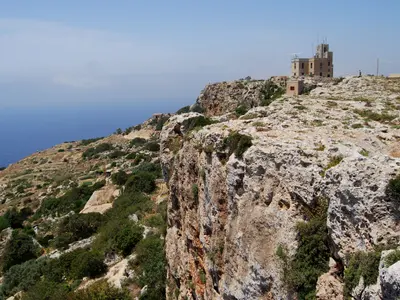
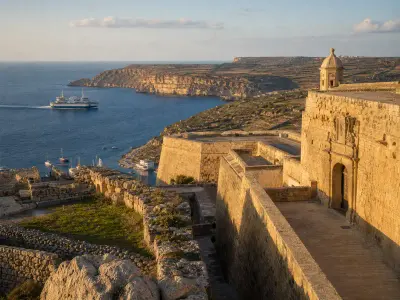
A few minutes uphill sits Dwejra Tower, a small coastal watchtower of the Lascaris line built by the Order of Saint John. Admission to Dwejra Tower is free. Dwejra Tower flies a flag when open.
Inland Sea boat rides, duration, boats, schedule and safety
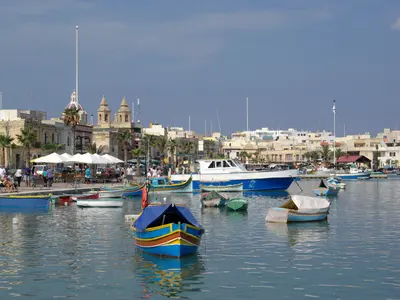
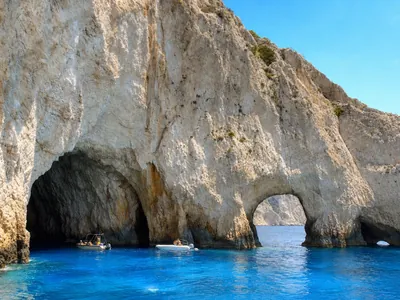
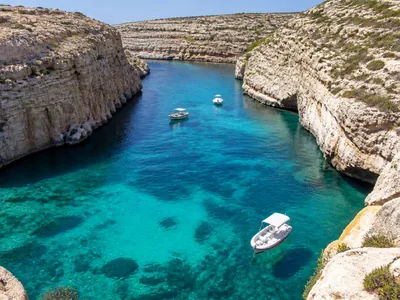
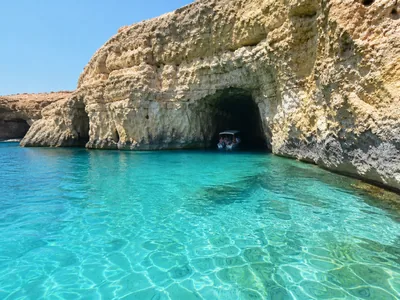
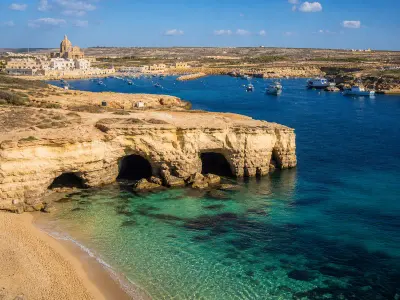
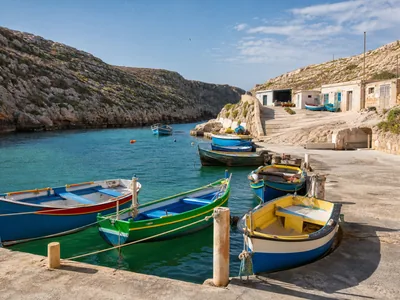
The Inland Sea boat ride takes 20–30 min. You will cross the calm lagoon, pass through the cliff and pop out to the open coast for a look at sea caves and the base of Fungus Rock before returning. The tunnel is about 70 m long. Headroom in the tunnel is about 2–3 m. Boats are traditional luzzu carrying 4–8 passengers, and skippers may row or use a small motor depending on conditions. Expect spray outside the lagoon, wear shoes that can get wet and bring a dry bag for phones.
Skippers will turn back if the swell stands up in the tunnel or outside. Listen to the boatmen and do not pressure them to go out when they say it is unsafe.
Swimming, diving and the Blue Hole (status, connections and headroom)
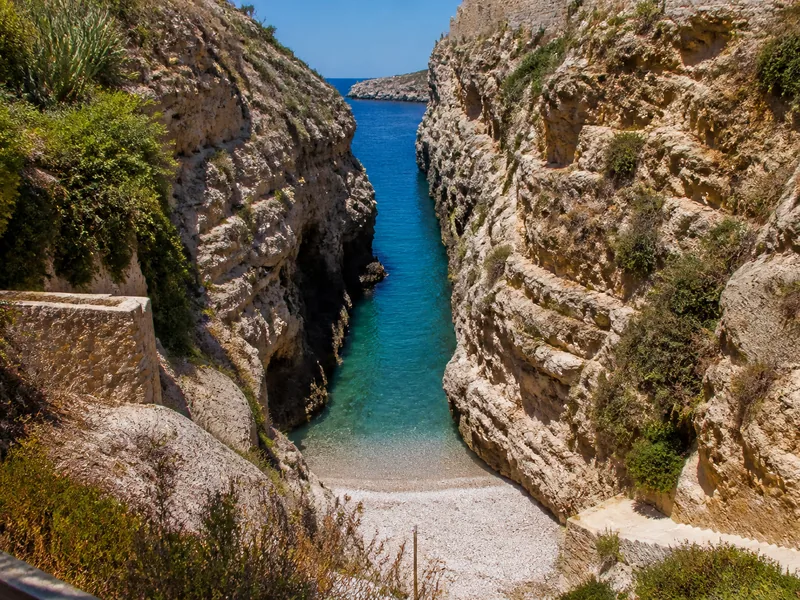
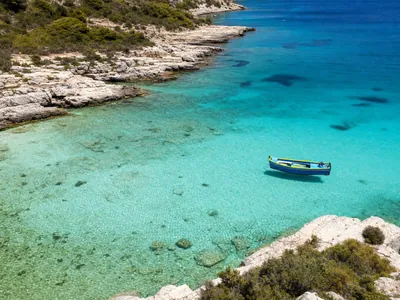
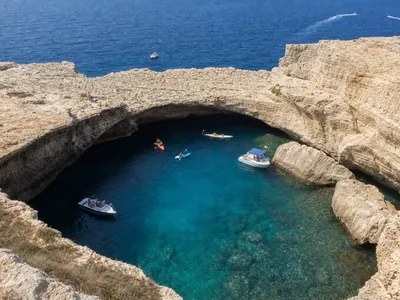
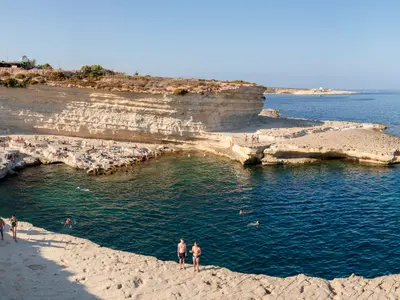
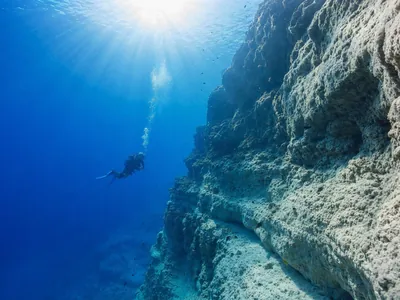
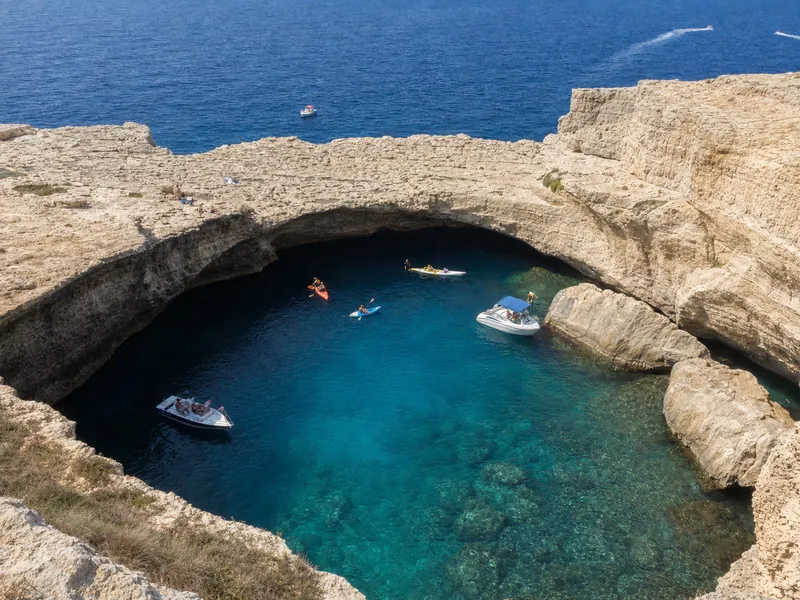
Strong swimmers use three spots here: the deep open sea by the cliffs, the calmer Inland Sea and the Blue Hole, a natural pool cut into the rock. The Blue Hole is connected to the open sea by an underwater archway. The Blue Hole is shaped like a vertical chimney. The Blue Hole is about 15 m across. Divers rate it among Malta’s top sites and you will hear it said locally that Cousteau earmarked it as a top 10 dive. If you dive, the collapsed Azure Window now forms a dramatic underwater boulder field and arch remnants that are part of the route out to the wall. Non‑divers can scramble to the pool edge and watch bubbles rising, but entry is from uneven rock rather than sand, so it is not ideal for small children.
Accessibility and safety on site
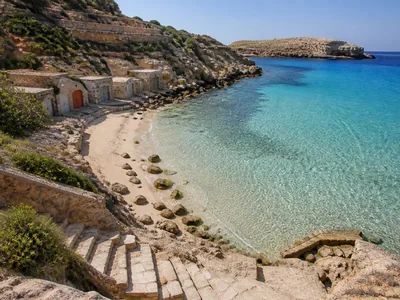
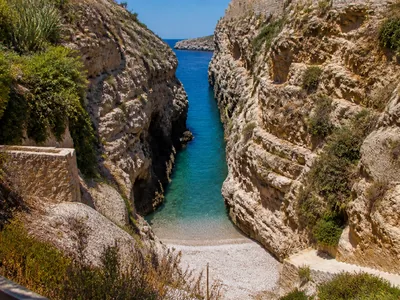
Dwejra Bay is not highly accessible, and most of the shoreline is jagged limestone. There are rock steps to an old slipway that help with one of the entries, and the Inland Sea side has a pebbly beach and a small quayside, but strollers struggle here. In heavy swell the cliff edge is dangerous and spray carries a long way, so avoid venturing close to the edge in rough weather.
How long to allow and suggested timings
Allow 1–1.5 h to see the full Dwejra area. That covers a slow walk between the Inland Sea, the Blue Hole platform and a look across to Fungus Rock. If boats are running, add the tunnel ride on top. Photographers get the best colour in the first and last hour of light, while midday brings the brightest water in the Inland Sea tunnel.
Extras nearby if you have time
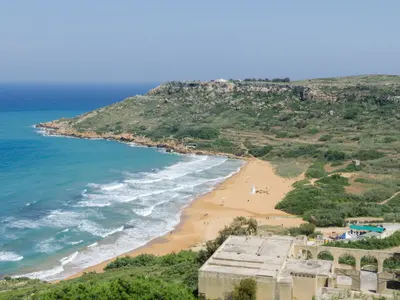
Fungus Rock is 65 m high. It was guarded in the Knights’ time for a prized medicinal plant and even saw its sides levelled and a cable car rigged to control access. Dwejra Tower above the bay belonged to the Lascaris chain and still stands watch, a good short detour if the flag is flying. For comparisons, the sea‑cave boats at the blue grotto on Malta are a good mainland equivalent, and divers who love the Blue Hole often plan a day at cirkewwa diving too. If you want a swim from sand later, head to ramla bay on the north coast of Gozo.
Last checked: 3 October 2026. Prices, opening hours and timetables change, verify anything time-sensitive before you travel. Photo: Diego Delso, CC BY-SA 4.0.