
The short verdict
If you pay to enter one building in Malta, make it this one. Nothing else on the islands is close, including sites people travel further to see. It is not for everyone though: it is room after room of dense, gilded, competitive decoration, and if that reads as clutter to you rather than craft, an hour here will feel long. It is also the most likely place in Malta to be turned away at the door, for reasons that have nothing to do with tickets.
What it actually is
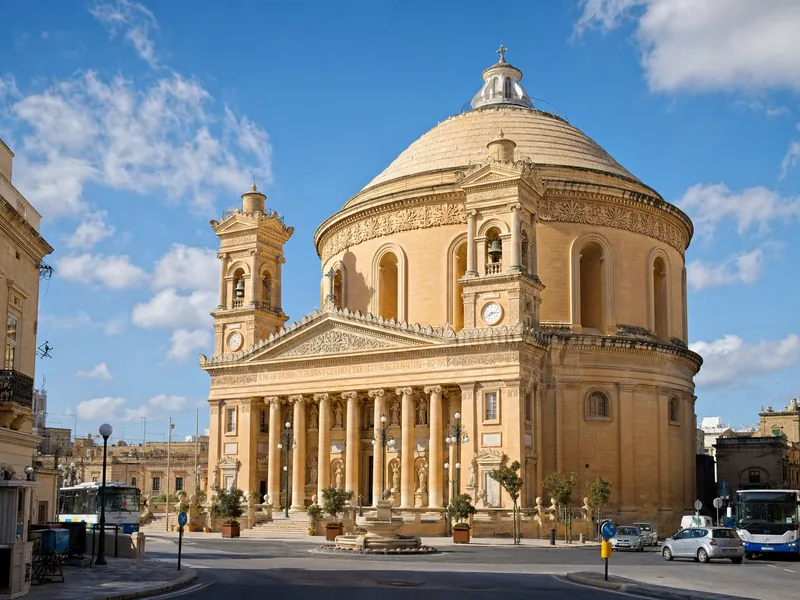
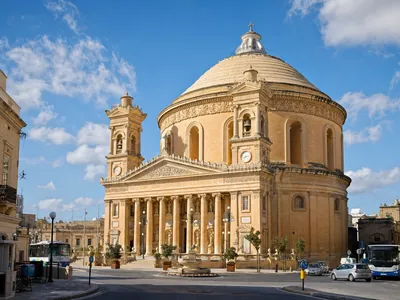
The conventual church of the Order of St John, built between 1573 and 1578 to a design by Girolamo Cassar, the military engineer who laid out much of Valletta. That background shows. From the street it is a flat, sand-coloured box with two blunt towers, closer to a barracks than a cathedral, and people walk past it looking for something grander.
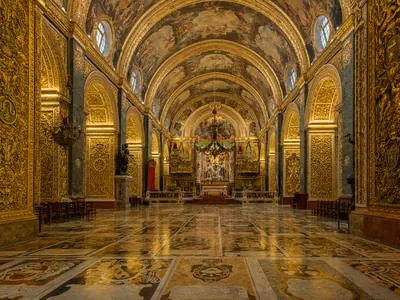
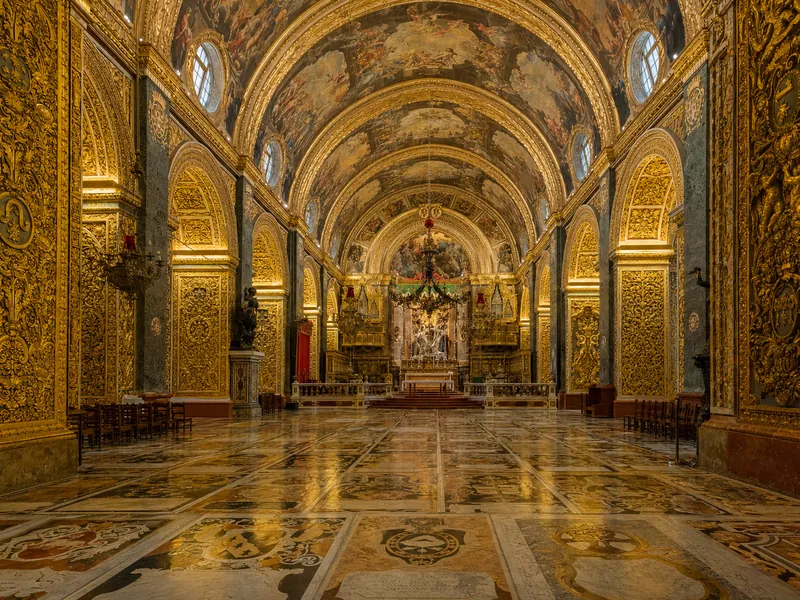
The inside was a later decision. Roughly a century after it was built, the Order set about covering every available surface, and the man who carried out most of it was Mattia Preti, a Calabrian painter who spent the rest of his life in Malta. He did not hang paintings on the walls. He had the limestone carved into relief and then painted directly onto the stone vault, so the decoration and the building are the same object.
Along both sides are chapels, one for each langue, the national divisions the Order was organised into: Italy, France, Provence, Auvergne, Aragon, Castile, Germany and England. Each langue decorated its own chapel, and each was watching the others. The result is an eight-way contest in marble and gold that ran for generations, which is a more interesting way to look at the building than as a single commission.
Why there is a “co” in the name
It reads like a typo and it is not. Malta's cathedral was, and still is, St Paul's in Mdina, the old capital inland. When Valletta became the centre of everything, St John's was raised to equal cathedral status in 1816 rather than replacing the older seat. So the archdiocese has two cathedrals of equal rank, and this one carries the “co” to say so. A small thing that explains a lot about how the island still balances Mdina against Valletta.
The floor is the part people miss
Look down. The nave floor is inlaid marble tomb slabs, several hundred of them, marking the graves of knights buried beneath. They are not plain markers. They are full-colour heraldic compositions in cut marble: coats of arms, trophies, Latin inscriptions, and a great many skulls, skeletons and hourglasses, because the Order wanted anyone walking the aisle to be thinking about death while they did it.
Two things follow. The floor rewards more time than the ceiling does, and almost nobody gives it any. And it is the reason for one of the two door rules below.
The Caravaggio in the Oratory
Off the nave is the Oratory, and in it hangs The Beheading of Saint John the Baptist. It is the largest canvas Caravaggio ever painted and the only painting he is known to have signed. The signature is worth finding: he wrote it into the blood running from the saint's throat.
The circumstances are part of the picture. Caravaggio had come to Malta with a death sentence hanging over him in Rome, was received into the Order as a knight, painted this, and was expelled within months after a brawl, in absentia, in the same Oratory the painting hangs in. A second Caravaggio, Saint Jerome Writing, is in the same room and is easy to walk straight past on the way to the famous one.
The Oratory is part of the ordinary visit, not a separate ticket. Give it longer than you think. It is a dark room and the painting takes a while to open up.
The two rules that turn people away at the door
Shoulders and knees covered, for everyone. This is checked, and it is not relaxed the way some churches are. People arrive from the coast in beachwear and are refused. Carry a light layer if the rest of your day is outdoors.
No stiletto heels. Thin heels concentrate enough weight to chip inlaid marble, and given what the floor is, they are not allowed in. Flat shoes solve it.
Neither rule is unusual for a working church. What is unusual is how many visitors reach Valletta without knowing about them, walk up, and have to turn around.
When to go
Early, and the difference is larger here than at most sites. This is on the itinerary of every cruise excursion and coach tour on the island, and those arrive in blocks. The building is not large, the Oratory is small, and thirty people in it at once changes what you get to see.
It is a working church as well as a visitor attraction, so access is restricted around services and the hours are not the same every day of the week. Confirm the specific day you are planning on before you build a morning around it, rather than assuming the pattern from another site.
What is actually bookable here
- 2 bookable options via KKday and Klook
- about €14 to €27 per person at the time of checking
Taken from the operators' own listings, checked 15 September 2026. Ratings are theirs, not ours, and we do not host reviews.
Combine it with
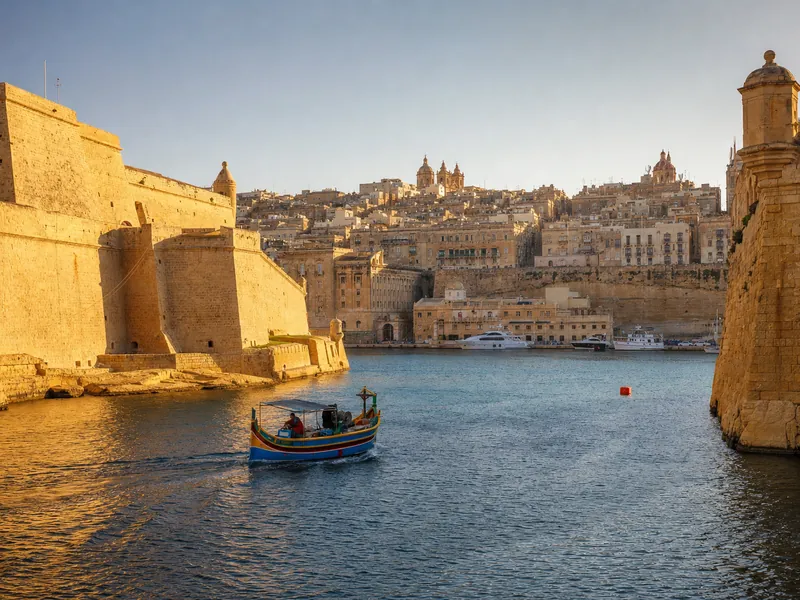
 VallettaWhat is worth paying for, and what is free
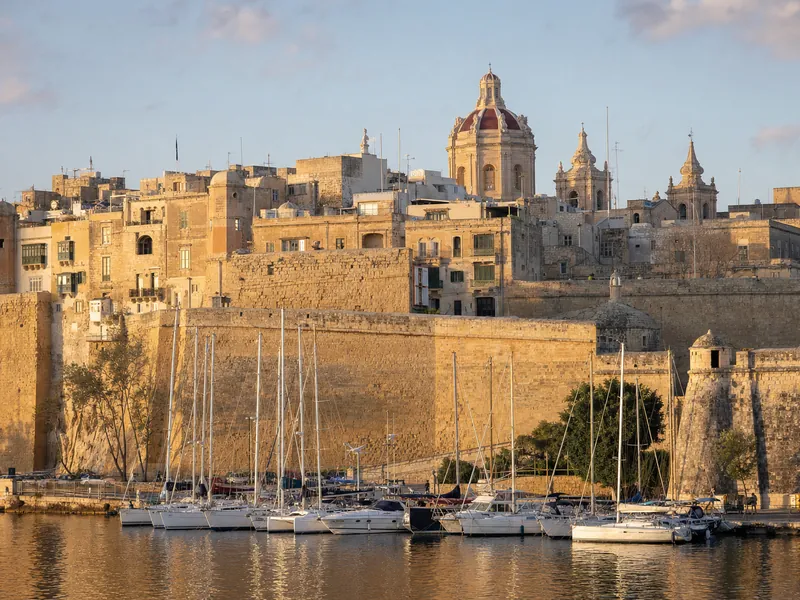
 Grand Harbour cruiseTen minutes downhill from the door
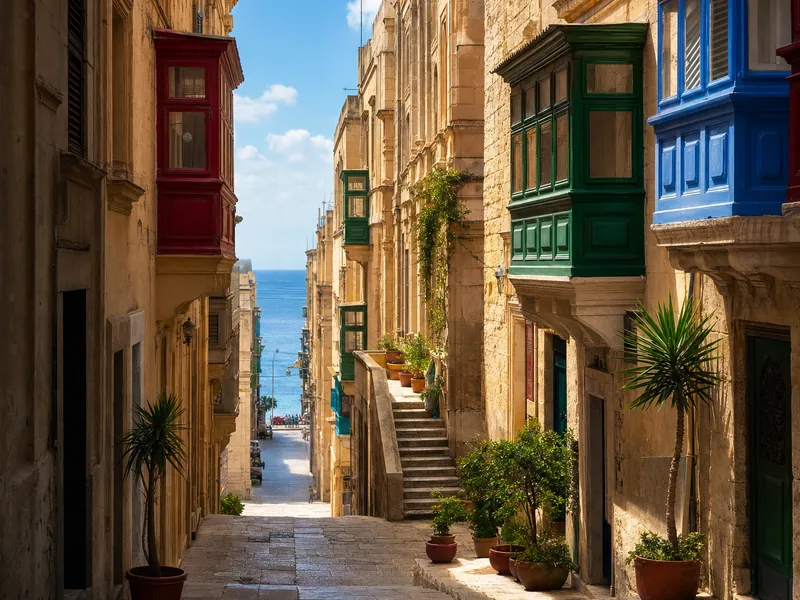
 The Three CitiesOlder, quieter, across the water
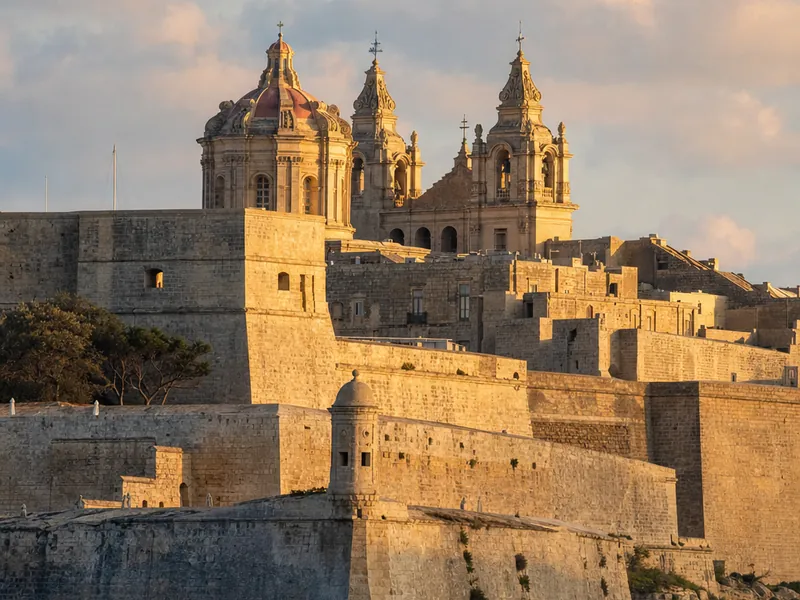
 Mdina & RabatThe other cathedral, and the older capital
Common questions
What is the dress code, and is it really enforced?
Shoulders and knees covered, for everyone, and yes. It is checked at the door rather than politely suggested. Stiletto heels are refused too, because of the marble tomb slabs underfoot. Flat shoes and a layer you can put on cover both rules.
Why is it a Co-Cathedral and not a cathedral?
Because Malta already had one, St Paul's in Mdina, and still does. St John's was given equal cathedral rank alongside it in 1816 instead of replacing it, so the island has two seats rather than one.
Can you actually see the Caravaggio?
Yes, and without a separate ticket. The Beheading of Saint John the Baptist is in the Oratory, on the normal visitor route. There is a second Caravaggio in the same room, Saint Jerome Writing, which most people miss.
How long should I allow?
About two hours to do it properly, including the Oratory. An hour walks you through it, but the detail is the whole reason to come, and an hour will not show you much of it.
Is it worth it if I am not religious?
Yes. Very little of the appeal is devotional. It is a competitive display of wealth and craft by eight national factions of a military order, plus two Caravaggios, plus a floor of several hundred heraldic graves.
Last checked: 14 September 2026. Opening hours, ticket arrangements and access around services change. Verify anything time-sensitive before you travel.